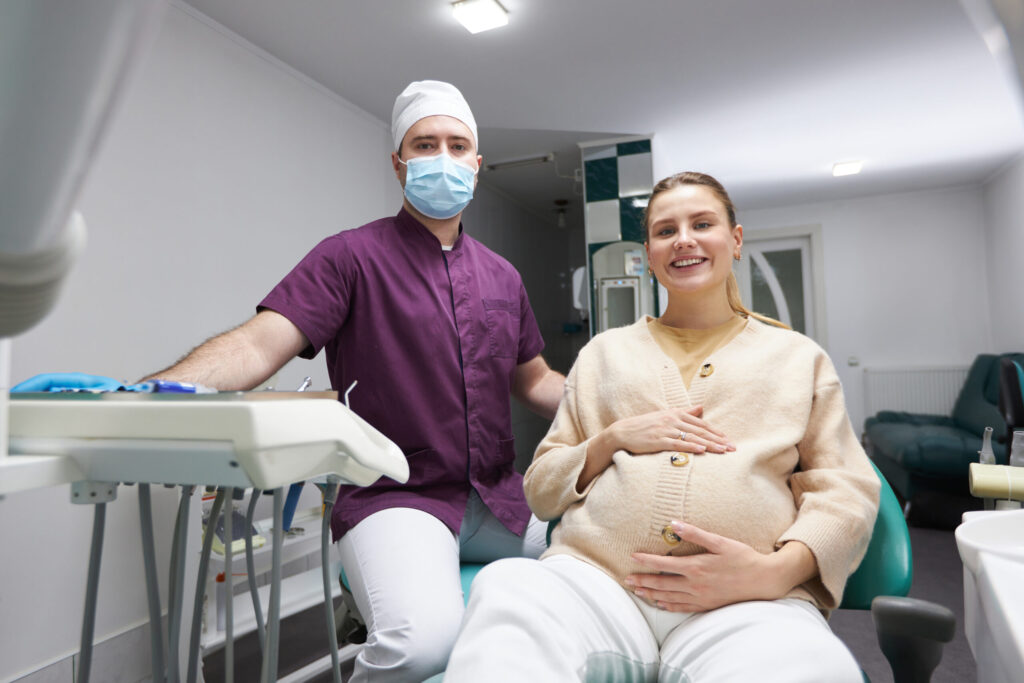
Pregnancy changes a lot about your body, and your oral health (including your gums) is no exception. It’s one of those connections between pregnancy and teeth that catches a lot of expecting parents off guard.
Because of the hormonal shifts that happen during this time, it makes gum tissue more reactive to plaque than usual. That’s why sore or bleeding gums are so common once you’re expecting. An estimated 60 to 75% of pregnant women are affected by gingivitis, according to University of Sydney research, most commonly in their second trimester.
Good dental care during pregnancy isn’t about doing anything drastically different. It’s about knowing what’s normal, what’s worth mentioning to your dentist, and when routine care matters more than ever.
Here’s what’s actually going on, and what to do about it.
Why Pregnancy Changes Your Gums
The hormone behind it is progesterone. Higher levels during pregnancy make gum tissue more sensitive to the everyday bacteria in plaque. The result is often called pregnancy gingivitis. It shows up as redness, swelling, and gums that bleed more easily when you brush or floss.
Remember, this doesn’t mean your oral hygiene has gotten worse. Many patients brushing and flossing exactly as they always have still notice more bleeding once they’re pregnant. It’s a hormonal response, not a hygiene failure.
That said, gingivitis is also very manageable. Good brushing and flossing usually keep it in check, and it typically settles down after the baby arrives.
What the Research Actually Says About Gum Health and Pregnancy
Here’s the part worth taking seriously, without overstating it. According to the Australian Dental Association, early research has found links between untreated gum disease and pregnancy outcomes, which may include low birth weight and early birth. The likely reasons are increased inflammation in the body and bacteria potentially reaching the placenta.
This isn’t a reason to panic over ordinary pregnancy gingivitis, which is common and manageable. It’s a reason to actually treat it. Bleeding gums aren’t something to just put up with for nine months. If brushing and flossing well doesn’t settle it, that’s worth a dental visit rather than a wait-and-see approach.
The encouraging side of this research matters too. A University of Sydney study looked at treating gingivitis during pregnancy. It found a real reduction in preterm birth risk. It was also linked to higher average birth weight.
Because of these manifestations, treating it isn’t just about comfort. It has a measurable effect.
Is It Safe to See a Dentist While You’re Pregnant?
Yes, and putting it off is the wrong instinct. Routine dental care, including check-ups and cleaning, is considered safe throughout pregnancy. A few specific things do call for extra care:
- Tell your dentist as soon as you know, or even suspect, you’re pregnant, and how far along you are.
- X-rays are generally avoided or minimised in the first trimester, taken only when necessary and with proper shielding.
- Elective or cosmetic treatments, like teeth whitening, are usually delayed until after the baby is born.
- The second trimester is often the most comfortable time for any non-urgent treatment.
A cavity or other simple issue doesn’t need to wait either. Routine treatments like fillings and cleanings are still considered safe throughout pregnancy. Leaving a real problem untreated is generally the bigger risk. At Hygge Dental, we will be asking whether you’re pregnant or not at your appointment and adjust from there. The consultation will likely be the same for when you’re not pregnant, aside from a bit more care around timing and x-rays where relevant.
Simple Ways to Protect Your Teeth and Gums During Pregnancy
A few small adjustments make a real difference:
- Brush gently, twice a day, with a soft-bristled brush, especially if your gums feel tender.
- Rinse with plain water after morning sickness, rather than brushing right away. Stomach acid softens enamel temporarily, and brushing straight after can wear it down further.
- Try a salt water rinse if your gums feel sore or brushing feels uncomfortable.
- Keep up your regular hygiene visits. This is exactly when they matter most, not a reason to skip them.
Cravings for sweeter foods are also common in pregnancy, and that’s completely normal. There’s no need to cut them out entirely. It’s more about not letting them replace the basics of brushing and flossing.
A Healthy Mouth Is Part of a Healthy Pregnancy
Pregnancy makes gum problems more likely, but most of it is easy to manage. That’s really the honest summary of dental care during pregnancy. Routine visits matter more now, not less. There’s no reason to put off dealing with something that’s bothering you until after the baby arrives.
If it’s been a while since your last check-up, that’s worth addressing. The same goes if something feels different about your gums. For general dentistry services in Spring Hill, QLD, our team at Hygge Dental can help you work out what’s going on as you also navigate through your pregnancy journey.
Book a Consult with our dentists, or Call Now to have a scheduled appointment.
Frequently Asked Questions
**Is it safe to have dental treatment while pregnant?**Yes, routine treatment including check-ups, cleaning and fillings is considered safe throughout pregnancy. Extra care is taken with things like X-rays, especially in the first trimester, but that’s a discussion with your dentist rather than a reason to avoid care altogether.
**Can I get dental x-rays while pregnant?**X-rays are generally avoided or minimised in the first trimester, and only taken when genuinely necessary, with proper shielding. Later in pregnancy, with the right precautions, they’re considered low-risk. It’s always worth telling your dentist you’re pregnant before any X-ray is taken.
**Can I get my teeth whitened while pregnant?**Cosmetic treatments, like teeth whitening, are usually delayed until after the baby is born. It’s mainly because dentists prefer to hold off on anything non-essential until pregnancy is over.
**Why are my gums bleeding more since I got pregnant?**Higher hormone levels make gum tissue more reactive to plaque, a very common condition called pregnancy gingivitis. It affects roughly half to three-quarters of pregnant women and usually settles down after birth, though it’s still worth keeping an eye on with good brushing and flossing.
**When’s the best time during pregnancy to see a dentist?**Any time you need to is fine, but the second trimester is often the most comfortable for non-urgent treatment. Routine check-ups shouldn’t wait until after the baby arrives.